When Industry Leaders Take Notice: OOH Today on the Evolution of Mobile Billboard Advertising
Published on: Friday, Feb 27, 2026
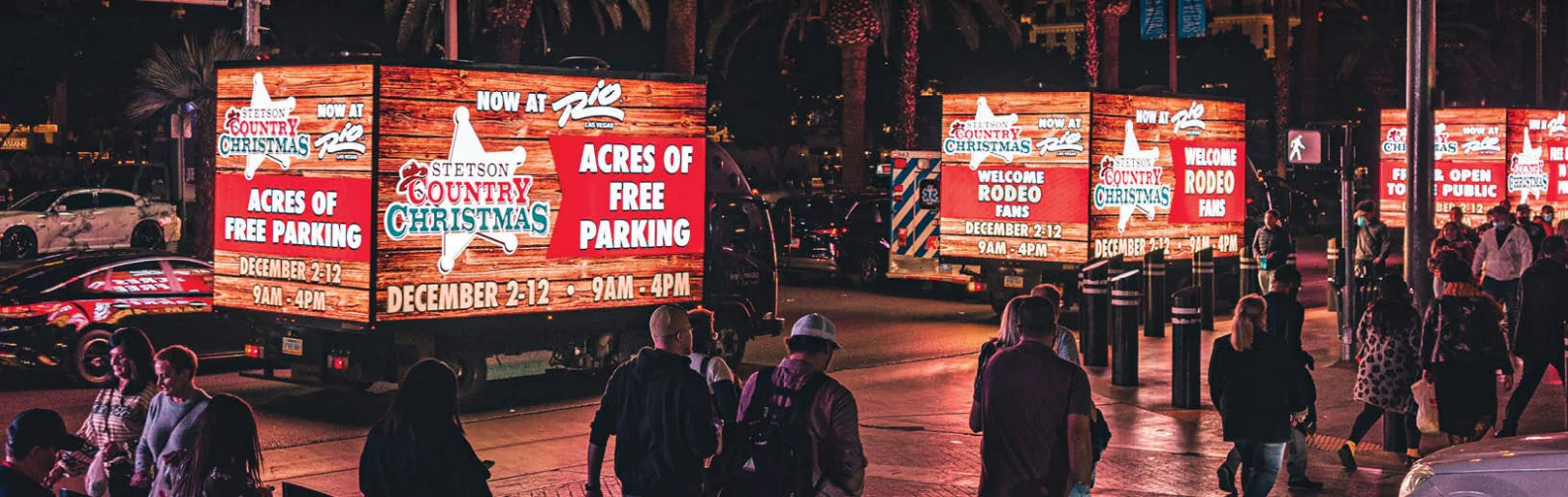
There’s a moment in every industry’s evolution when the narrative shifts—when what was once dismissed as a novelty becomes recognized as a strategic necessity. For mobile billboard advertising, that shift is happening now.
On February 6th, 2026, OOH Today published “Where Moving OOH Stops Being a Gimmick and Starts Acting Like a Media Channel“—an industry analysis that used our operational approach at LED Truck Media as the focal point. We’re honored by the recognition, but more importantly, we’re encouraged that the conversation is finally catching up to what we’ve known for years: executed correctly, mobile OOH isn’t a gimmick. It’s a precision marketing instrument.
The Professionalization of Mobile OOH
The article’s central thesis resonates with everything we’ve built our business on: mobile LED billboard advertising has matured from a tactical stunt into a legitimate media channel with measurable outcomes and strategic applications. This didn’t happen by accident—it happened because companies like ours invested in the technology, processes, and accountability that brands demand from every other media investment.
After thousands of campaigns for Fortune 500 companies and growing businesses alike, we’ve seen firsthand what separates professional mobile billboard advertising from the vehicles that damaged the category’s reputation. The difference isn’t just the quality of the LED screens—it’s the entire operational philosophy.
Technology That Demands to Be Taken Seriously
The OOH Today piece highlights our commitment to technology that works in the real world, not just in pitch decks. High-resolution LED screens optimized for daylight visibility. Real-time GPS tracking that proves your campaign ran where and when it was supposed to. Audience measurement analytics that connect impressions to actual human traffic patterns. Campaign performance documentation that gives you the data your CFO will actually respect.
This infrastructure exists because our clients expect it. They’re allocating serious media budgets and they need serious accountability. When we say we executed 47 campaigns at a major conference or delivered market-level saturation for a product launch, we can prove it—down to the route, the timestamp, and the audience count.
Strategic Applications, Not Just Tactical Stunts
The article correctly identifies where mobile OOH delivers value that static inventory simply can’t match. We see three primary strategic use cases:
Major event activation. When tens of thousands of people converge on a single location for a limited time, static billboards on the highway three miles away aren’t going to cut it. You need to be in the venue perimeter, in the parking areas, on the routes between hotels and convention centers. Our event advertising campaigns put brands in the exact geographic footprint where their audience is concentrated.
Product launches and market takeovers. When you’re launching in a new market or introducing a product that needs immediate awareness, waiting for available static inventory—or paying the premium rates for high-demand locations—kills momentum. Mobile campaigns let you dominate a market on your timeline, not the billboard company’s availability schedule.
Precision targeting when static won’t reach. Some audiences don’t drive the same highway routes every day. They’re in urban cores, campus environments, entertainment districts, or residential neighborhoods where static billboards don’t exist. Mobile OOH meets people where they already are—a philosophy the OOH Today article quoted directly from our approach: “Meet people where they already are, and do it with precision.”
Complementing Static, Not Competing
One of the most important points in the article—and one we consistently emphasize with clients—is that mobile OOH strengthens traditional static billboard campaigns when executed professionally. This isn’t an either/or decision. The most sophisticated campaigns use static for sustained market presence and mobile for precision targeting, event activation, or market gaps.
We’ve run campaigns where mobile trucks drove retargeting routes through neighborhoods surrounding static billboard locations, creating a layered awareness strategy that reinforced the message across multiple touchpoints. That’s not a gimmick—that’s strategic media planning.
Industry Validation Matters
Recognition from OOH Today—a publication that covers the entire outdoor advertising industry—matters because it signals that mobile billboard advertising is being evaluated on the same criteria as every other professional media channel: technology, measurement, strategic application, and results.
We didn’t get into this business to drive trucks around events and hope brands noticed. We built LED Truck Media to modernize digital mobile billboard advertising with the same rigor, accountability, and strategic thinking that defines legitimate media channels. It’s gratifying to see the industry press recognize that shift.
If you’re ready to explore how professional mobile OOH fits into your media strategy—whether for event activation, market launches, or precision targeting—let’s talk about what’s possible when mobile billboards stop being a gimmick and start acting like the media channel they were always meant to be.
Share This Article
Stay Updated with the Latest Insights!
Get the best of mobile advertising news, tips, and trends delivered straight to your inbox
Ready to Transform Your Advertising?
Get Started Now and Explore New Possibilities with Our Comprehensive Mobile Billboard Solutions.